Front matter
Medical equipment financing, written up plainly for the people who sign for it
A CBCT unit, six operatories or a new anesthesia machine should not have to come out of the practice operating account.
Provide Capital Finance arranges medical equipment financing and leasing for dental offices, physician practices, imaging centers, veterinary hospitals and med spas across the United States. We finance from $5,000 to $5,000,000, new or used, on fixed monthly payments over terms of up to 84 months. The first look is a soft credit pull that does not touch your score, and decisions often come back the same day.
| Item | What to expect |
|---|---|
| Amount | $5,000 to $5,000,000 per transaction |
| Equipment | New or used, from a dealer, manufacturer or private seller |
| Term | Up to 84 months, fixed monthly payment |
| First look | Soft credit pull, no score impact. Hard pull only if you go ahead |
| Decision | Same-day decisions are common |
| Funding | Often within 24 to 48 hours of approval, paid to the vendor |
| Collateral | Usually the equipment itself |
| Down payment | $0 down options for qualified buyers |
| Tax | Section 179 can apply. Ask your tax advisor |
In this issue: original articles
- 01
Dental equipment financing
Chairs, delivery units, sterilization, lasers, intraoral scanners and milling. How dentists finance a single operatory or a whole refit, and what the lender wants to see.
- 02
Dental office financing for new and expanding practices
The equipment side of a startup, a second location or an acquisition refit, and where a practice loan from a bank or SBA lender fits alongside it.
- 03
Medical imaging equipment financing
CBCT, panoramic and digital X-ray, ultrasound, C-arms, CT and MRI. Larger tickets, longer terms and the soft costs that ride along with installation.
- 04
Veterinary equipment financing
Digital radiography, ultrasound, anesthesia, dental stations, surgical suites and in-house lab analyzers for small animal, mixed and equine practices.
- 05
Med spa equipment financing
Lasers, energy-based devices and body contouring platforms, and why the per-treatment economics matter more here than in any other specialty we finance.
- 06
Rates and terms, explained
What sets the price of medical equipment financing, how term length and down payment change the deal, and loan versus lease in one table.
- 07
Choosing a medical equipment financing company
Vendor programs, banks and independent lenders compared, plus the questions worth asking before you sign anything.
- 08
Questions practices ask us
Credit, documents, used equipment, startups, buyouts, prepayment and Section 179, answered briefly.
Practice notes: single topics, worked through
- 01
Dental operatory design
Clock-concept zones, rear against side delivery, the floor box, and turning a room plan into an equipment budget.
- 02
Refurbished medical equipment
Used, refurbished and remanufactured told apart, wear points by equipment type, and an inspection record to fill in.
- 03
Ultrasound machines
Why two quotes for one model differ: transducers, packages and form factor, with a cost-per-scan check.
- 04
MRI suites
The four safety zones as a budget map, and which project lines an equipment lender can carry.
- 05
Veterinary anesthesia machines
The gas path from oxygen to scavenger, the components that set the price, and buying used.
- 06
Hair removal lasers
Alexandrite, diode, Nd:YAG and IPL compared, with a break-even worksheet you fill in.
- 07
The cost of opening a med spa
Budget categories, how ownership rules shape them, and a worksheet for your own quotes.
- 08
Payment calculator
Amount, term and your quoted rate in; payment, finance charge and a yearly schedule out.
Plates
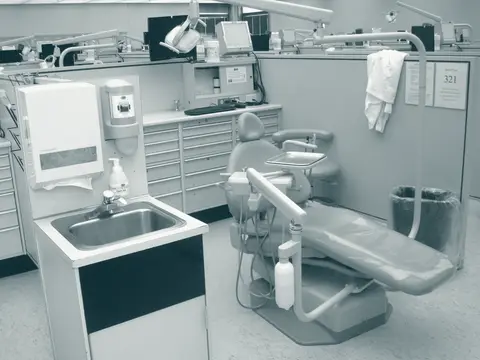
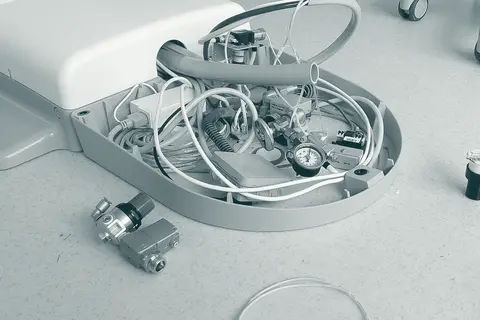
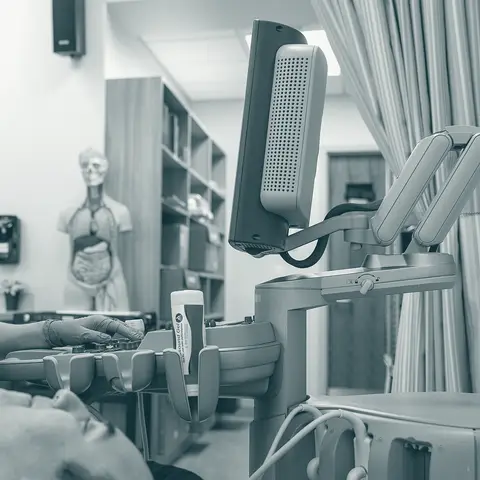
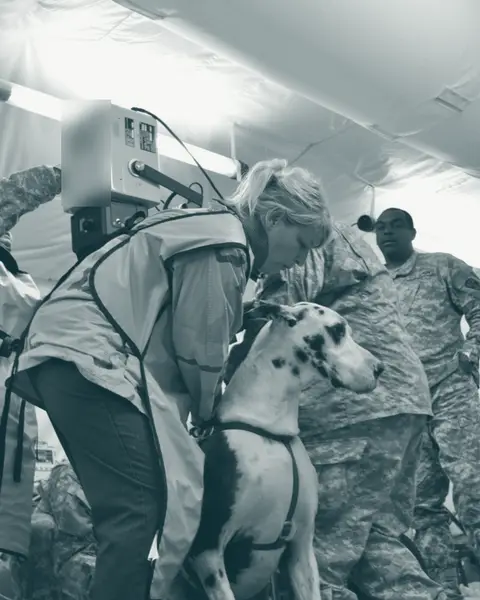
Plates I, II and IV: public domain. Plate III: CC0. Sources in each article. Toned by Provide Capital Finance.
What does medical equipment financing cover?
Medical equipment financing is a loan or lease secured by the equipment it pays for. It covers most hard assets a practice installs and uses to see patients, plus much of what sits behind the front desk. The lender pays the vendor, the practice makes fixed monthly payments, and the equipment usually serves as the collateral.
In practice that means almost anything with a serial number and a resale market. A dentist replacing two chairs and a compressor, an orthopedic group adding a C-arm, a mixed animal practice buying a portable X-ray for farm calls: the structure is the same. What changes is the size of the ticket, how long the asset stays useful, and how much the lender can recover if it ever had to.
Used and refurbished equipment is financed too. Refurbished imaging and pre-owned dental chairs are common requests, and the main questions are age, condition and who is selling it.
| Specialty | Typical requests |
|---|---|
| General dentistry | Chairs, delivery units, lights, sterilization, compressors, vacuum |
| Specialty dentistry | CBCT, surgical microscopes, lasers, scanners, mills |
| Physician practices | Exam tables, EKG, spirometry, ultrasound, lab analyzers |
| Imaging | DR rooms, CT, MRI, mammography, C-arms |
| Veterinary | DR, ultrasound, anesthesia, dental, surgical tables, lab |
| Med spa | Lasers, RF microneedling, body contouring, IPL |
How does a file move from application to funding?
Most files follow the same four steps. The short version: we look before you commit, and you see the terms before anything touches your credit report.
The full detail, including what lenders look at and how term length changes the payment, is in rates and terms for medical equipment financing.
Soft credit pull. A credit check that shows a lender your credit profile without recording a hard inquiry. It does not affect your credit score. A hard pull is recorded and can have a small effect, which is why we only run one once you decide to proceed.
Section 179 Many practices can deduct some or all of the purchase price of qualifying equipment in the year it is placed in service, financed or not. Limits and rules change, so read the IRS Publication 946 guidance and ask your tax advisor how it applies to you.
What does a financed purchase look like on paper?
A specimen, so the arithmetic is visible. An orthopedic practice adds three items from three vendors and finances them as one agreement with $0 down. Before any finance charge, the monthly principal is simply the total divided by the months. Table 3 shows that figure for three terms and turns it into a cost per clinical day, at 16 clinical days a month.
| Term | Principal per month | Per clinical day |
|---|---|---|
| 36 months | $156,000 ÷ 36 = $4,333.33 | $270.83 |
| 60 months | $156,000 ÷ 60 = $2,600.00 | $162.50 |
| 84 months | $156,000 ÷ 84 = $1,857.14 | $116.07 |
The rate on your offer adds to every line. Put it into the payment calculator and the table becomes a real payment, a total finance charge and a yearly schedule.
| Item | Amount |
|---|---|
| DR panel retrofit for an existing X-ray room | $78,000 |
| Portable ultrasound, two transducers | $42,000 |
| Four power exam tables | $36,000 |
| Total financed | $156,000 |
- Three vendors, one agreement, one payment. Each vendor is paid when its item is delivered.
- The 84-month line halves the monthly figure against 36 months, and costs more in total once the rate is applied.
- A portable ultrasound may be replaced before a DR panel is. Splitting it onto a shorter term is an option.
Why do practices finance equipment instead of paying cash?
Cash is the most flexible thing a practice owns. Payroll, a slow insurance quarter, a broken autoclave the week before a hygiene blitz: these all come out of the same account. Paying cash for a $90,000 chair package turns that flexibility into a fixed asset in one afternoon.
Financing spreads the cost over the years the equipment actually earns. A fixed payment is easy to budget, and because the equipment secures the deal, it usually leaves your bank line untouched for the things a bank line is good for. Many owners also prefer to keep a cash reserve in case a hard month arrives just after a large purchase.
None of that makes financing right for every purchase. A $6,000 curing light bought from strong cash flow may not be worth the paperwork. We will say so if you ask.
What should a practice have ready before applying?
Less than most owners expect. For a modest purchase the application and the quote are often enough. For larger amounts, the list grows to what any lender reviewing a practice would want.
- The vendor quote, item by itemNo quote yet? Apply anyway; an approval gives you a firm number to shop with.
- Legal name of the practice, entity type and start date
- Approximate annual revenue
- Larger amounts: two years of business tax returns
- Larger amounts: a year-to-date profit and loss statement
- Used equipment from a private seller: serial numbers and proof of ownership
Primary sources we cite
- IRS, Publication 946: depreciation and Section 179.
- SBA, loan programs: 7(a) and 504 for practice purchases and build-outs.
- EPA, dental effluent guidelines: amalgam separators.
- FDA, medical devices and radiation-emitting products.
- OSHA, anesthetic gases guidance.